Crap Beer But Great Fishing.
- A giant South Australian Snapper.
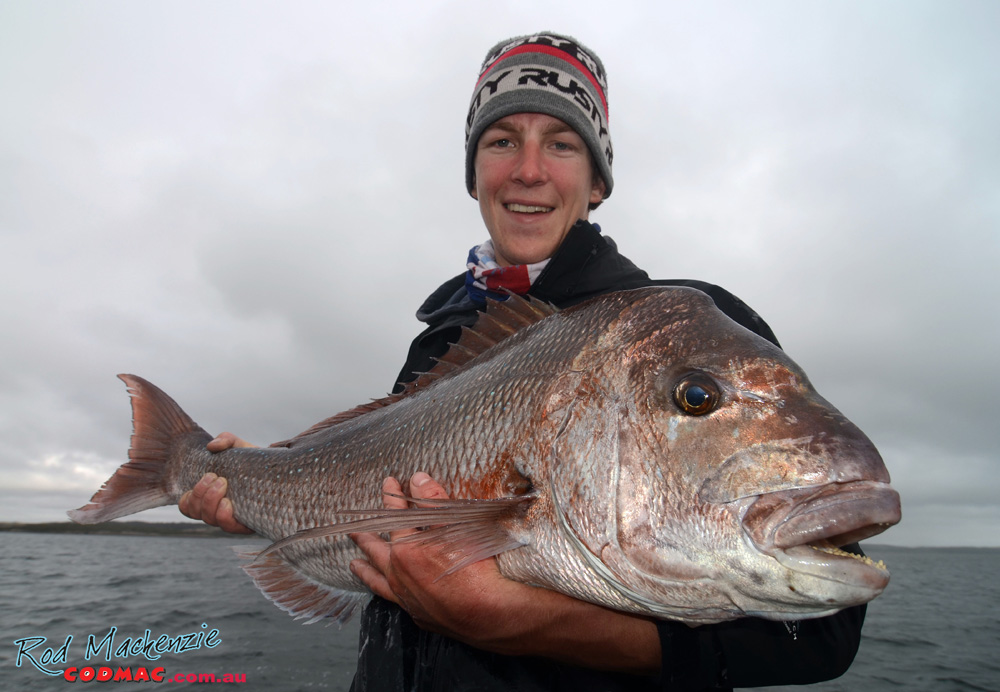
Where is the best fishing you’ve ever had? Well if we are talking a specific location, that’s a hard one as each spot has its own special attributes, your first trout or biggest cod are reason enough to make a particular location a memorable one. If however, we were talking state based, then for me it would have to be South Australia. No one specific location stands above the rest, every visit to this unique fishery has been as special as the last.
As a bread and butter fishery, South Australia has it all. For the land-based angler, pristine beaches with 4×4 access provide countless miles of fish rich water to explore and wet a line. Catches include giant mulloway, huge red snapper, Australian salmon and a variety of other species. Imagine that being able to drive the beaches in search of a suitable gutter to cast a line. Heaven forbid you drive your vehicle along the beach in Victoria you could run over a bloody seagull egg or something. Over the past few summers, we fished several of these beaches, some for the first time and caught quality fish on each occasion. For the jetty rats, these same species are also caught from most piers along the coast. Add to these possibilities the biggest King George Whiting you are ever likely to see and a variety of other edibles including squid and blue swimmer crabs and the excellent fishing this state has to offer becomes more evident. At the risk of sounding silly, even the small fish in South Australia are big. Locals measure mullet in pounds, not centimeters and a ten-kilo snapper is viewed as simply a nice fish. Bag this same red in Port Phillip Bay and you claim the right to instant legend status, commanding your own stool amongst the weather beaten anglers at the end of the bar.
If you venture offshore the fishing only improves. On some of the reefs and sea mounds, giant Samson’s and Kingfish become an option. Two of the toughest opponents on rod and reel, catching one is something you won’t forget in a hurry. While you’re waiting for one of these to happen along you will be knocked up winding in all manner of quality table fish including red snapper and morwong.
While they may be responsible for serving some of the worst beer known to mankind, our friends across the border do address this indiscretion by providing some excellent angling opportunities. If you are yet to venture across the border to wet a line, believe me it’s well worth the effort.
Follow Your Gut
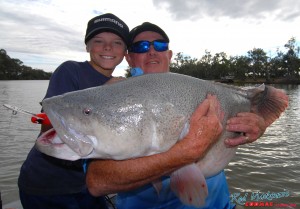
- Just one of five meter plus Murray cod landed in a single day this season.
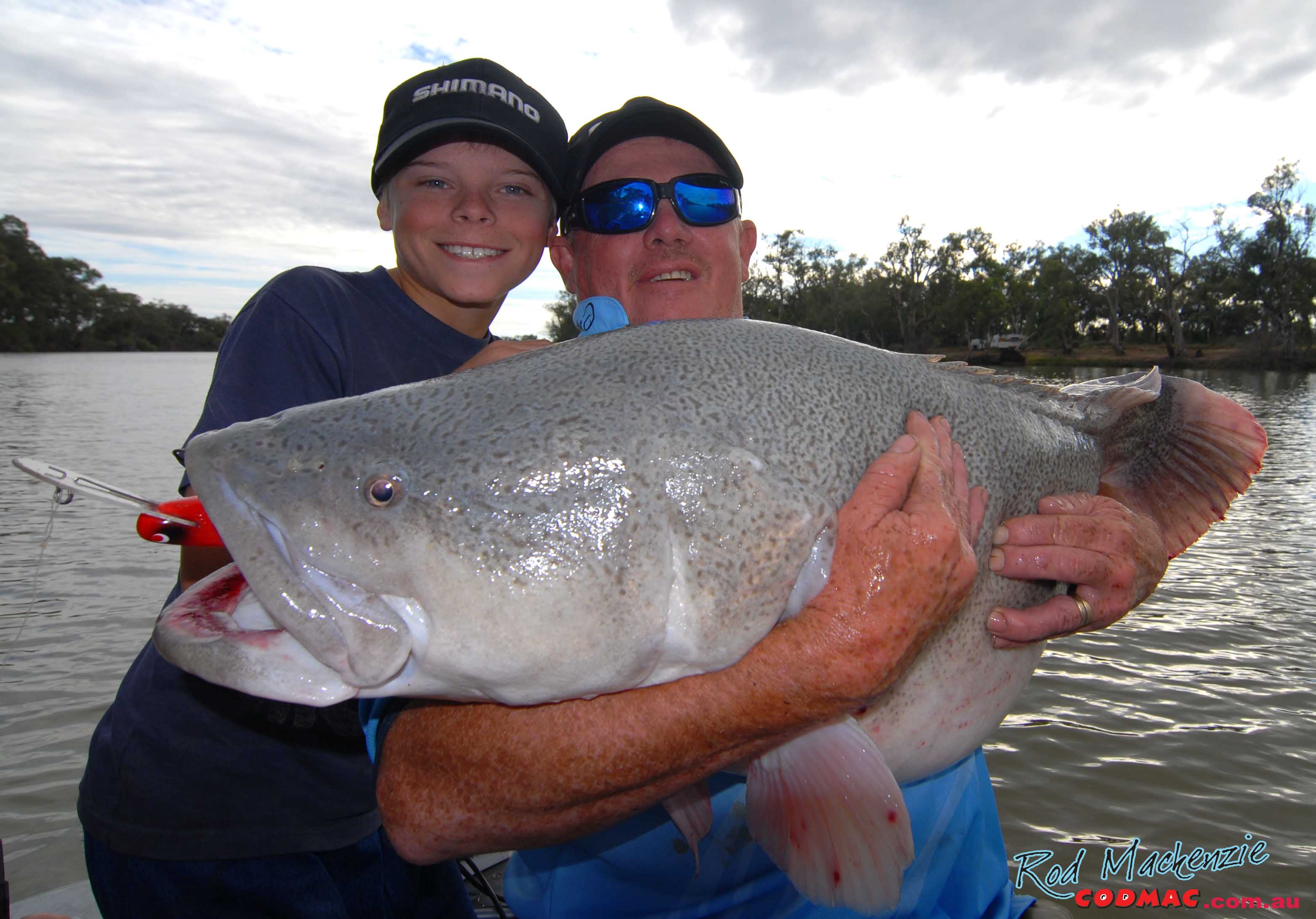
Matt Davis posed a question that I am sure troubles most of us at one time or another when we are out on the water. Matt Asks….
One thing that doesn’t get talked about much. That’s flogging dead water. What are some of the things that tell you that the water is just going to be unproductive no matter what you put in there. Making you decide to move to a different area? I know I get caught up thinking a spot looks like an ideal habitat and try working it with heaps of different lures and tactics ending up in a long time spent. Questioning if you didn’t have the right lure, wrong tactic or just no fish in there?
Hey Matt there are a lot of answers to this question and I believe most of them ride on your gut. There are a number of things to stop and think on after flogging what you might deem as dead water for naught result. The first of these would be; do big cod get caught in this area? If so then you already know this is not the problem. Water clarity up or down can change the feeding habits of cod as can time of day or year and most off all shifts in barometric pressure. But if you truly feel that there are big cod where you are fishing then chances are your right. I remember all too well the first time I fished a section of the Murray we come to know as the Green Mile. It too screamed of big fish with all the right calling cards. Several dozen old snags jutting from the depths failed to raise a single strike on the first three visits. A thousand casts come and went for not so much as a follow. So how did this place get its name you might wonder? A clear frosty morning was to lay waist to doubt on this section of river as a run of cod had seven fish landed over a meter before 11 o’clock in the morning. There were other missed opportunities amidst the madness and those that were caught were some of the biggest we had ever seen. Now ask yourself this, when should we have dismissed this piece of water as unproductive should it have been after the first, second or third time we had fished it for nothing? There are no real answers to this other than to follow your gut on what it is you know about these fish and where they should be found.
A falling river generally fishes poor for cod but I have seen them bite well during summer under such conditions. In the pool water big cod always throw caution to the wind and feed in glutinous fashion preceding a rise in water. This is not true of other locations. Winter produces big fish for those with patience and casting is far more productive than trolling, the opposite is true of summer. Fish where others don’t and try different things. After casting spinnerbaits all day at one location for not a bump my young bloke cast a dirty great surface lure towards a snag in full light, as a youngster he had much to learn. An explosion of water detonated not a meter into the retrieve as a giant cod inhaled the lure. Who’d a thought that.
Other things I have found true of big cod is that they are bloody hard to catch out of small rivers even when everything is aligned in your favor. You can cast the best looking logs with a wide range of lures and just know in your gut that a giant green fish is bobbling well within striking range yet content to refuse your best presentation. I have seen logs that scream big fish cast a thousand times for nothing only to get smashed on the next visit.
Matt this is how I work my cod fishing.
I fish locations that regularly produce big fish. I like a steady river and reasonable clarity, frosty mornings are great and I always fish big lures. I believe in what I do and fish with confidence, this is very important. Several times now I have seen five or more cod caught over a meter caught in a single session and have no doubt I will see it again. Understanding big fish do not attain their size through stupidity will improve your fishing no end. We are lucky enough up this way to have several locks within a few hours’ drive if ones not producing others often are. Most importantly be patient as what are deemed the fish of a lifetime can be caught with common consistency if you just follow your gut.
Mulwala 20012 Cod Nationals.
- Winners are grinners- The top three teams at this years Cod Nationals.
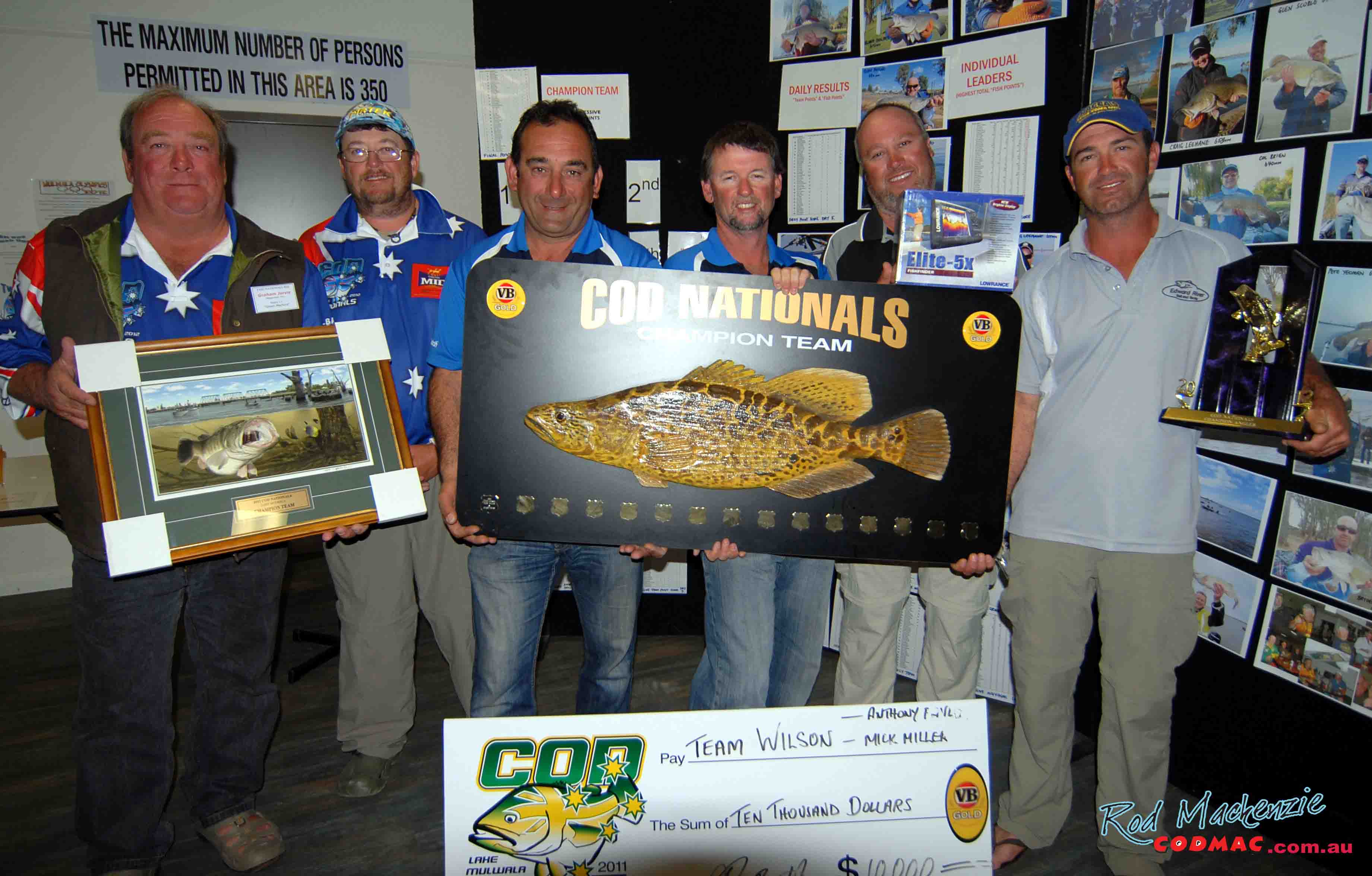
Recently held on Lake Mulwala the 20012 Cod Nationals fishing event drew some of the most dedicated and talented cod fishos in the land. At the completion of its second year there is no doubt it is by far Australia’s most prestigious cod fishing event bar none. While the fishing is upper most in the minds of those that attend it is structured to be a serious yet entertaining event for all involved. Yabby and ferret races, games and trivia nights, team auctions and one of the best comedians in the land all contributed to what can only be described as the most enjoyable and funniest weeks angling you could ever want to be part of. 25 teams – 50 competitors, all dedicated “Green” fisho’s gathered from all parts of the land to pit their skill against other like minded anglers. The Cod Nationals is a “lure only” total catch and release event fished over five days with each day being fished under a different format. Quiet simply the name of the game is to catch cod with a sliding point score system rewarding fish of greater size. At the completion of each day, teams finishing in the top ten positions were awarded points ranging from ten for first through to one point for tenth, the team finishing with the most amounts of points after five days was declared the winner.
After most took the chance to get in a bit of “pre-fishing” on Monday it was time to gather for the event briefing. Well structured, simple and easy to follow rules and scoring system left all in no doubt what was required to do well under the competitions format – simply catch cod consistently over five days. Monday evening was also a bit of fun with all teams being auctioned off to the highest bidder. There was now a fair bit of interest from outside parties of how other teams were going as the winning team overall would return in excess of $1K for their owner along with good money for second, third and last.
Day 1 – “Balista Lures” Any Lure Style.
With all anxious to get on the water and into the real stuff after a couple of days pre fish, expectations were high. Grey sky’s along with wind straight from the arctic made conditions tough. “Balista Lures” was the daily sponsors lure with any cod caught on one being rewarded a half extra bonus point, critical to the teams standing at the end of the week. First fish measured came in from Steve Hogan and it was taken on a Balista. A steady trickle of fish was measured through out the day but none better than an 835mm beauty brought in by Team Outlaw’s Jamie Stewart. This cod helped Jamie and partner Bryden Whitfield to maximum amount of points and $500 daily winner’s cheque at the end of the first days fishing. Sitting close behind in second was Phil Keetelaar and Richard Cambridge of “Bendigo Marine Happy Hookers” while “Green Machine’s” Steve Hogan and Wally Jarvis held onto third.
An interesting evening ensued with all competitors being split up into groups to take part in a fishing based trivia night. Categories such as Lakes and Rivers, Painted Sticks and Trinkets, Cod Nationals 11 and Fishing Competitions were on the agenda. Numerous questions left many scratching their head, especially when they thought they knew a bit about fishing. Led by the knowledgeable Graeme Clark, “Clarky’s Wizards” won out on the night by a hefty margin helping them take home a fair selection of lures.
Day 2 – “Outlaw Spinnerbaits” Da$h 4 Ca$h.
Day two Anzac Day was celebrated by all competing anglers as a group. Looking brilliant dressed in their official Cod Nationals shirts that bore the colours of the Aussie flag competitors gathered to support the march participants. After the service it was back to their boat in preparation for the “Outlaw Spinnerbaits” Da$h 4 Ca$h, a quick fire four hour fishing session for the afternoon. Weather conditions deteriorated with wind and rain battering all. Only two legal cod were presented for measuring with a very deserving Darren “BF” McDonald and Jamie Kelly bringing in the first. An hour later Waz and Judy Hicks returned a nice specimen (Taken on an Outlaw Spinnerbait) but due to time bonus’s, it did not beat the boys earlier cod. “BF” and Jamie earnt themselves $1000 for their effort while Hicks’s team “Eat Em Alive” pocketed $700 for second place. All in all after day two with team points being distributed down to tenth place “Green Machine’s” Steve Hogan and Wally Jarvis had snuck up into first place with a combined total of 15.5 points. Team Outlaw’s Jamie Stewart and Bryden Whitfield slipped back to second on 15points while Phil Keetelaar and Richard Cambridge of “Bendigo Marine Happy Hookers” hung on grimly to third. Evening entertainment consisted of Ferret and Yabby races, a casting competition and marshmallow catch. A hilarious evening left all in stitches with those lucky enough to place in each event going home with some great prizes.
Day 3 – “Halco / RMG Lures” Hard Body Only Day.
Again the weather gods punished competitors with relentless bitterly cold wind for the day. To match the weather, fishing conditions were tough also. Being the “Halco / RMG Lures” Hard Body Only Day as the name suggests, only hard bodied lures could be used with added bonus points on offer for anything caught on a Halco or RMG lure. Anglers that sought protection from the wind up the top end of the lake towards Bundalong were rewarded with best returns. Fishing the lake for the first time, young Sydney boys Paul Duren and Greg Hogan from “Team Polar Craft” came up trumps with three nice legal size cod for the day helping themselves to the daily winner’s cheque of $500. John Haley and Kirwan Williams of “Beer Bait & Bulldust” measured in two fine specimens for second while yours truly and partner Jamie Robinson finished third for the day and pocketed $300 for a 795mm unlucky cod I managed to produce!
Consistent fishing saw team “Green Machine’s” Steve Hogan and Wally Jarvis finish sixth for the day and maintain their overall lead on 20.5points. Jamie Stewart and Bryden Whitfield (17 points) hung on to second place with a ninth place finish for the day while Waz and Judy Hicks (16.5 points) loomed up into third place with a solid fifth place showing for the day. Des Dowling, one of Australia’s premier funny men was on the menu for Thursday night and he did not disappoint. Quick witted and with the ability to leave hecklers looking silly at the drop of a hat, he had all amused. This left anglers in good spirits and looking forward to a more “fisher friendly” day for Friday.
Day 4 – “Bassman Spinnerbaits” Spinnerbaits / Crankbait Only Day.
Heading into day four, akin to the “Premiership quarter” in a game of football saw numerous teams needing to make a move if they were to catch up or those out in front needing to continue their consistent form to keep the field at bay. Bassman Spinnerbaits” Spinnerbaits / Crankbait Only Day had the majority of the field back in their comfort zone as this was their preferred fishing style. Perfect autumn conditions with a slight breeze and perfect clear sky’s gave anglers a break and a chance to fish hard in search of the mighty Murray cod. Anthony Pavlou from “Team Wilson”, 2011 Cod Nationals Champion Angler and part of last year’s winning team got on the board early for the day with a magnificent 842mm beast being returned to scale. The battle at the top of the individual leader board was starting to heat up with Bryden Whitfield, Ian Rogers, Pav, Pete Hromenko and Mick Miller all gaining some handy points thanks to their returns. Ultimately it was “Team Wilson’s” Anthony Pavlou and Mick Miller who took out the daily prize money but more importantly, the 10 points on offer for their win helping them sneak up into fourth place overall (17 points) and a chance to repeat their winning performance from last year if everything went to plan. Jamie Stewart and Bryden Whitfield regained the overall lead with a strong second place finish for the day seeing them sitting on top with 26 points. Sharing second place was the consistent teams of Waz and Judy Hicks along with Steve Hogan and Graeme Jarvis on 21.5 points. Sydney boys Paul Duren and Greg Hogan sat back in third with 20points, also looking for a strong showing on the final day.
Day 5 – “Mudguts Spinnerbaits” Double Points Day.
Heading into the final day, any one of 16 teams had a chance of taking home the big dollars if results fell their way. With double points on the line, one fish could either make you or break and how true this saying was by day’s end. It was also critical for teams trying to sneak an extra point or two to be using the Mudguts Spinnerbaits, the daily sponsors lure. Teams that had not produced over the first four days were finding good cod while those at the top of the leader board were doing it tough. Terry Jenkins was one of those who came up trumps landing a very healthy 835mm monster. One team was fortunate enough to land two legal cod of generous size for the day but their identity was kept under wraps until presentation later that night.
Presentation Evening
Results were disclosed with the “Lowrance Champion Angler” title being revealed first. One point per cm for any fish under 60cm, six points per cm for any cod in the sixty cm bracket, seven points per cm for any cod in the seventy cm bracket and so on saw Paul Duren from “Team Polar Craft’ finish third with a total of 1570.4points. This was a great effort for Paul considering it was the first time he had fished Mulwala. In second place and only a mere 43.6points behind the winner was Corowa’s Ian “Painter” Rogers. “Painter” had put a lot of time and research in Mulwala over the last twelve months and it certainly paid of. Taking out the title for a very consistent week long performance of landing four legal and six undersize cod was “Team Outlaw’s” Bryden Whitfield (1854 points) from Moulamein. Bryden hadn’t spent much time fishing here in the past by was ably guided / partnered by Jamie Stewart, a part time local. Thanks to Lowrance, Bryden took home a great a great new sounder along with perpetual trophy and other goodies. The trophy for overall longest cod went to Anthony Pavlou, “Team Wilson” for his great effort of landing an 842mm model on day four.
Being based around “team”, the big money was for the teams that finished in the top five positions. Finishing in a creditable fifth position was “Team Spider Paint”, Corowa brothers Ian and Matt Rogers on 24.5 points. This helped them to a cheque of $500. Storming into fourth with a strong final day showing was Peter Hromenko and Leigh Roberts from “Team Prostrike”. Their intimate knowledge of the lake went along way to helping them secure $1000. An unlucky third pocketing $2500, nothing to be sneezed at went to day four leaders, “Team Outlaw”, Jamie Stewart and Bryden Whitfield. Unfortunately for the boys they failed to fire on the final day with double points being on the line and it cost the dearly. Second place, $5000 and the title of Mr. Consistent went to team “Green Machine’s” Steve Hogan and Graeme “G-Train” Jarvis. Steve and the “G-Train” were the only team to score points on every day of the competition and well deserved their cash. This only left the “2012 Cod Nationals Champion Team” title to be revealed and it went to none other than “Team Wilson’s” Anthony Pavlou and Mick Miller. These boys had a great final day catching two legal cod to help secure maximum daily points. With results going their way it was back to back wins and congratulations all round as they had emulated their effort from the previous year. Winners are grinners and the hefty sum of $10,000 certainly brought a smile to their faces. Both anglers declared they would be back for the 20013 Nationals to defend their title. Mick’s speech revealed that they stuck to their plan of casting lures or spinnerbaits (depending on what the days fishing allowed) in the shallower margins of the lake and never giving up. When the conditions got tough they dug in and fished harder.
All in all, the Cod Nationals was the best and professionally run events that I have ever had the privilege to fish. Copious amount of top notch food, fuel, drink’s, ice and massive prize money over the combined six days made the $1000 entry cost super value for money. I can guarantee that if you fish it once you will never want to miss it again. Do yourself a favour and add it to your “bucket list” of things to do. Only 365 more sleeps till the next Cod National’s, bring it on!
Cray Season Opens.
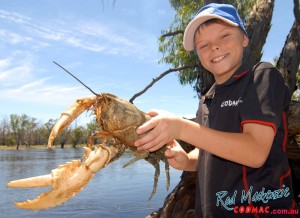
- A giant Murray cray. I wonder how many of these are left in the Murray after last years Black water event.
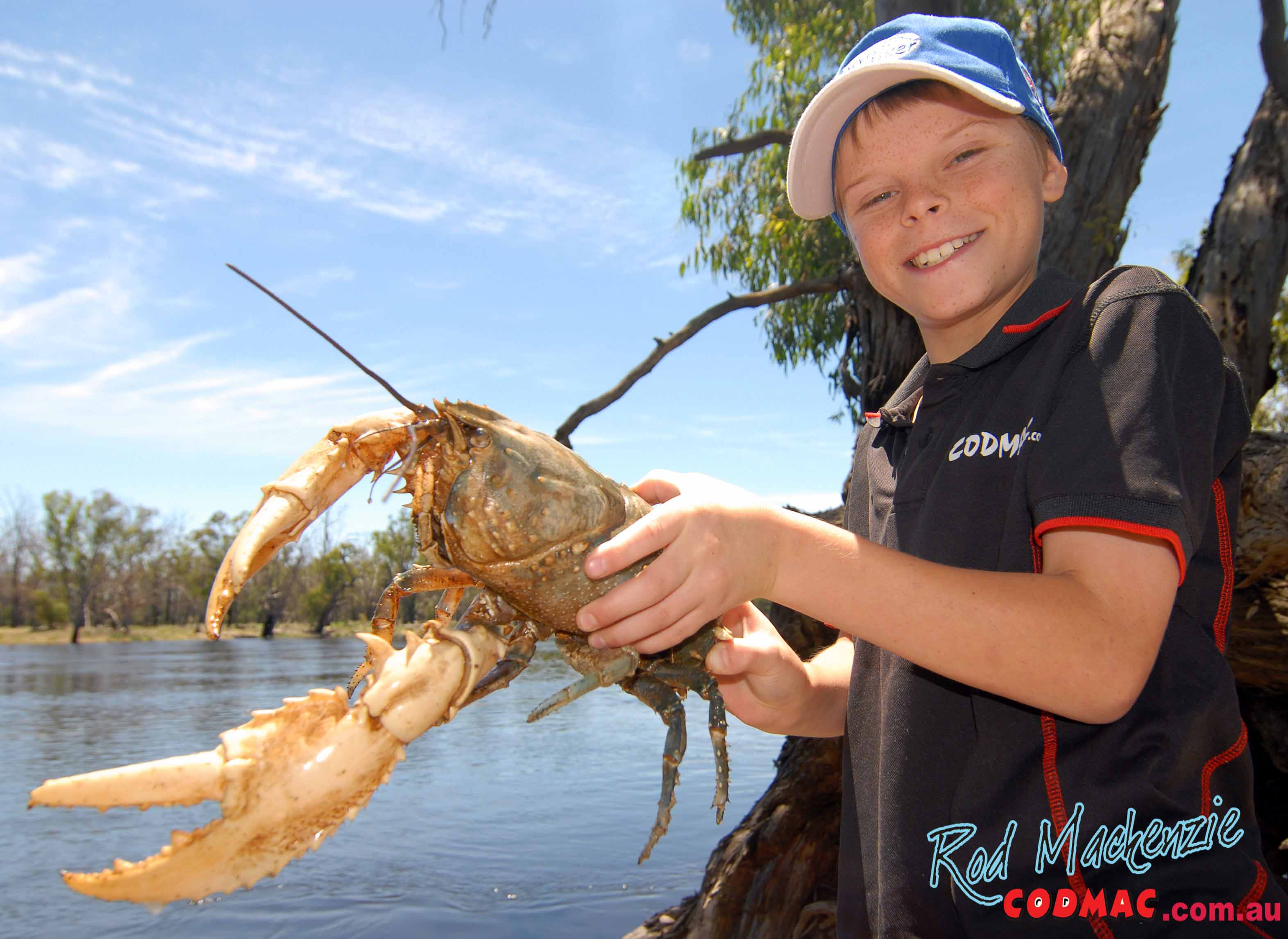
NSW Department of Primary Industries (NSW DPI), Director Fisheries Compliance, Glenn Tritton, said there are a number of rules in place to protect the species that are mainly found in the Murray, Murrumbidgee and Edward Rivers.
“The annual Murray crayfish season is limited to four months of the year, May to August, to avoid the over-fishing of this valued native species,” Mr Tritton said.
“Murray crayfish are very slow growing and are subject to environmental stresses such as black water events and land use practices.
“It is important that anglers follow the rules to ensure the sustainability of Murray crayfish into the future.
“A current NSW recreational fishing licence is required for all types of fishing in NSW, including Murray crayfish, and there are bag and size limits in place.
“Crayfish measuring devices and advisory material are freely available from NSW DPI fisheries offices and most tackle outlets to assist fishers to understand and adhere to the rules.
“Our fisheries officers will be out in force during the season to ensure the rules are being followed.”
Mr Tritton said that NSW DPI continues to review and research the Murray crayfish population and related fishing rules.
“NSW DPI is currently undertaking scientific surveys to assess the status of the Murray crayfish population and fishery in NSW,” he said.
“There will also be consultation with recreational fishers on possible changes to the rules as part of the upcoming review of bag and size limits.
” Fishers are reminded that it is illegal to use any nets, except a landing net as an ancillary to a rod or line, above Lake Hume in the upper Murray River from its junction with, and including, Seven Mile Creek at Talmalmo.
The main Murray crayfish rules are:
A daily bag limit of five applies with a total possession limit of 10, if fishing over numerous days.
Must have a carapace (head) length of at least nine centimetres (measured from the rear of eye socket to centre rear of carapace), but only one crayfish greater than 12 centimetres may be kept.
They can only be taken during the months of May, June, July and August.
A ban applies to taking Murray crayfish in trout waters and Blowering Dam.
Any female crayfish taken that are carrying eggs must be returned to the water immediately.
Removing claws/head/tail in, on or adjacent to water is illegal.
Five hoop nets per person permitted with letters ‘HN’ and user’s name and address on the float.
NSW Recreational fishing licences are available at many bait and tackle shops, some Kmart stores or by calling
1300 369 365 or online at temp.licence.nsw.gov.au. For more information on Murray crayfish visit temp.fisheries.nsw.gov.au.
One Elusive Giant.
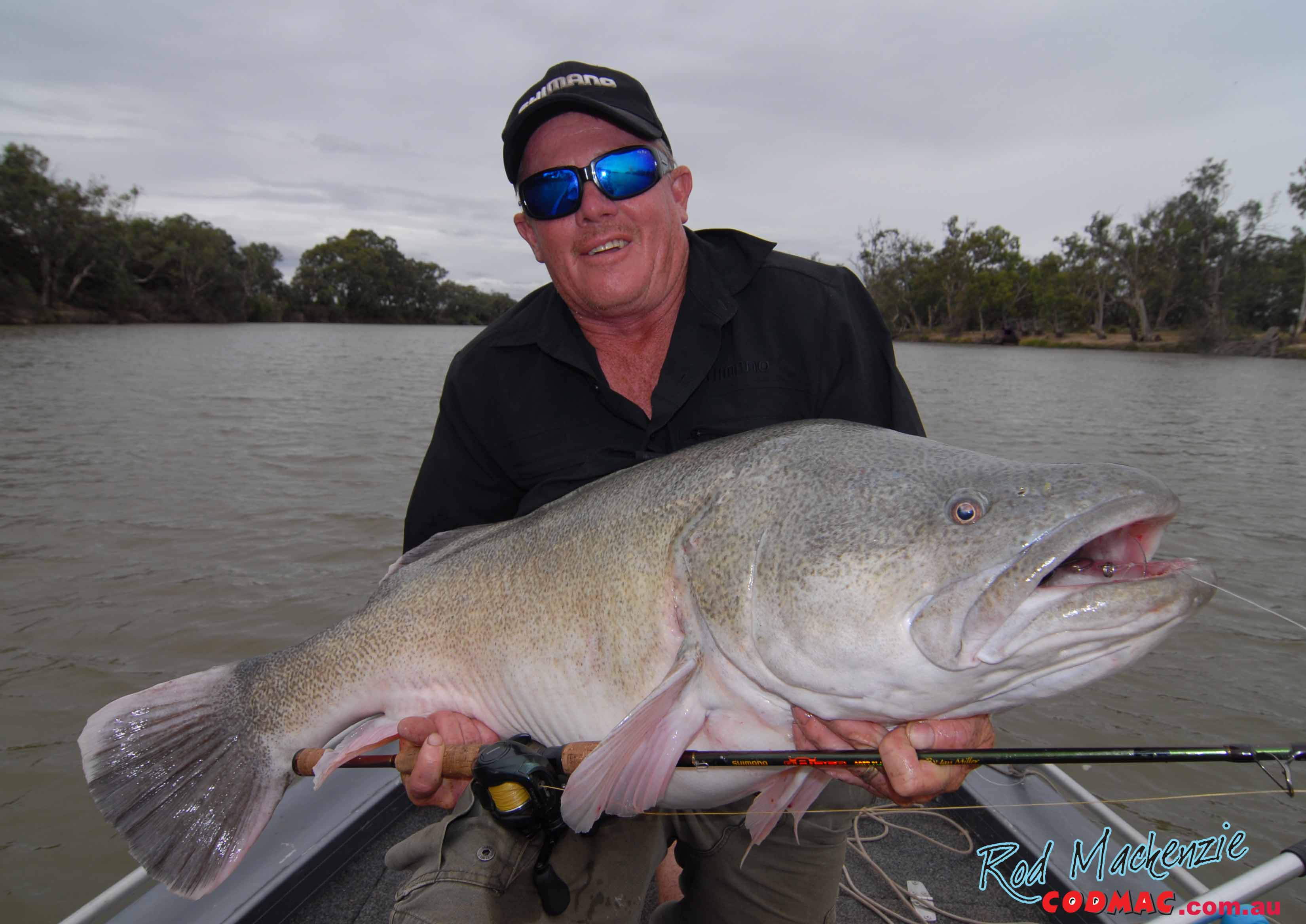
A giant Murray cod taken on the troll.
That one elusive giant would be payment enough for the endless hours, early mornings and a pile of lures that would go close to clearing the mortgage. Yet, for a large portion of fishos, catching a big Murray Cod remains as distant today, as when their obsession first began.
There are anglers that have spent the better part of a lifetime fishing for Murray cod, only to be denied the euphoria associated with landing the big one. Some might say a cruel twist of fate; others will tell you the fish gods have a poor sense of humor. My thoughts are, it’s ok to want something; another altogether to understand what it is you want.
The upper echelon of Murray Cod, do not achieve their size through stupidity. They are astute to the every day activities of their underwater environment. The mere fact that they have made it this far is testament in itself of their cautious nature. To know where, when and what to hunt is what they do on a daily basis. Big cod are both calculating and patient. If your intention is to pursue and catch them with any regularity, you need to acquire these same skills. Murray cod, like most species of fish, have certain triggers that heighten their feeding activity. Strange as it may seem, they have the ability to detect an oncoming rise in water level days before its arrival. During this time, they gorge themselves, slowing to a stop once the rising water has passed through. Periods coinciding around the full moon see an increase in activity, as do sharp rises in barometric pressure. Planning your fishing to be on the water at these times will give you every chance of landing the big one.
During the heat of the day, large cod hold up on the snags in the comfort of the deep water. The best way to target these fish is to troll deep diving lures. Troll wide of any large trees that have succumbed to the river. Dragging your lure directly over the top of them in most cases will see it rise up and out of the strike zone. Try to target the furthest most tip of the tree that’s lying on or close to the bottom of the river. This may be as wide out as the middle of the river. Once you have worked out a run, be patient. The variables that coincide with placing a lure in the exact right spot when trolling are almost incalculable. Once you become accustomed to this style of fishing, gut instinct becomes second nature. Any section of deep water containing plenty of structure will also contain plenty of big cod.
There are many ideas bandied around about the territorial nature of big cod, some are sound others are not. In larger rivers with consistent depth, several big fish may, and most often do inhabit a single fallen tree. On many occasions, we have scored multiple catches of big Murray cod in a single session, all from close quarters of one another.
Once you become accustomed to the habits of big Murray Cod and use them to your advantage; it’s only a matter of time. When it does finally come, you will be treated to one of the greatest fishing euphoria’s any freshwater angler can hope to experience. It’s mandatory now to pinch myself every time one of these giants comes to the boat, so far it’s all been real.
Coming Of Age
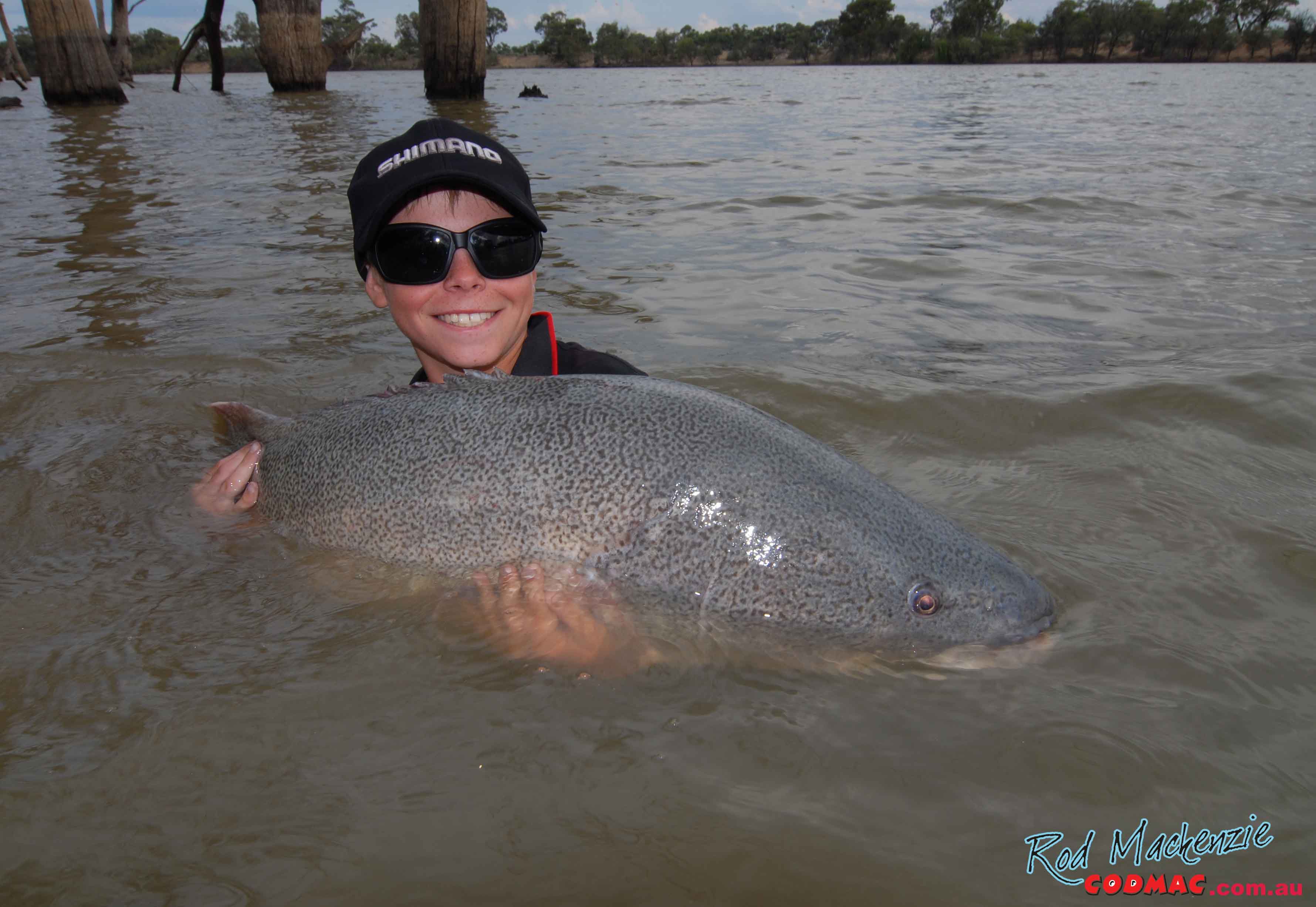
Both exhausted Jock holds the massive 120cm cod in the shallows.
It is clear in my mind as though it were only yesterday. Fishing the Murray River upstream of Belsar island when the caning strike from a giant Murray cod stopped the lure dead in its tracks. Not long after, I was staring at a monster fish of no less than 42kg. A definitive angling moment that has since shared few equals.
Almost two decades on, fishing the Murray River with my son Jock, I was treated to another angling high where the student finally comes of age. We are trolling a deep rock bar and the young bloke has selected his own lure. As he ties the dark blue lure to the line, it’s hard not to marvel at how far he has come as the intricate knot is wrapped in simple fashion. A long cast is sent out the back then as any learned angler would, he asks the depth. Seven meters down and structure everywhere; he lets out a calculated amount of line and kicks the reel into gear. Within a short minute the lure bounces off the first log and then another. As it swims clear into the open it is slammed hard and the rod buckles over under the weight of what looks to be a very large fish.
Many hours on the water have led to this exact moment and while a string of small to medium fish have engulfed the lure over the past few seasons, none have had the weight or size of the monster fighting on the other end of the line. With slow deliberate lifts, the fish is drawn towards the boat, the small skinny arms working overtime to stall every dive. Almost to the surface, the fish steals line and the rod once again lays over threatening to drag the young bloke off the deck and into the drink. Five minutes on and the heavy drag is starting to take its toll on both angler and fish alike. Just a few meters under the water the huge cod shakes its head in a bid to remove the lure and Jock knows all too well that this is the time most fish are lost. He wants this fish and in a muttered breath between winds pleads to the fish gods that it not get off. As a father, I too want him to succeed as catching these giant fish is very special moment indeed. As it breaches the surface beside the boat, its monstrous bulk sets small angling hands trembling in a moment that has few angling equals. One last dive then into the net and the fight is won.
Several years of early mornings, late nights and many hours on the water had led to this exact moment and the smile said it all. As I said earlier I have had many angling highs but this was the equal of any and it was shared with a young man that is truly finding his feet as a very good angler. When it comes to fishing’s finer moments well I guess you could say it doesn’t get much better than when a young fisho finally comes of age.
Lures A Fishy Find.
- This lure tells a fishy tale of the one that got away.
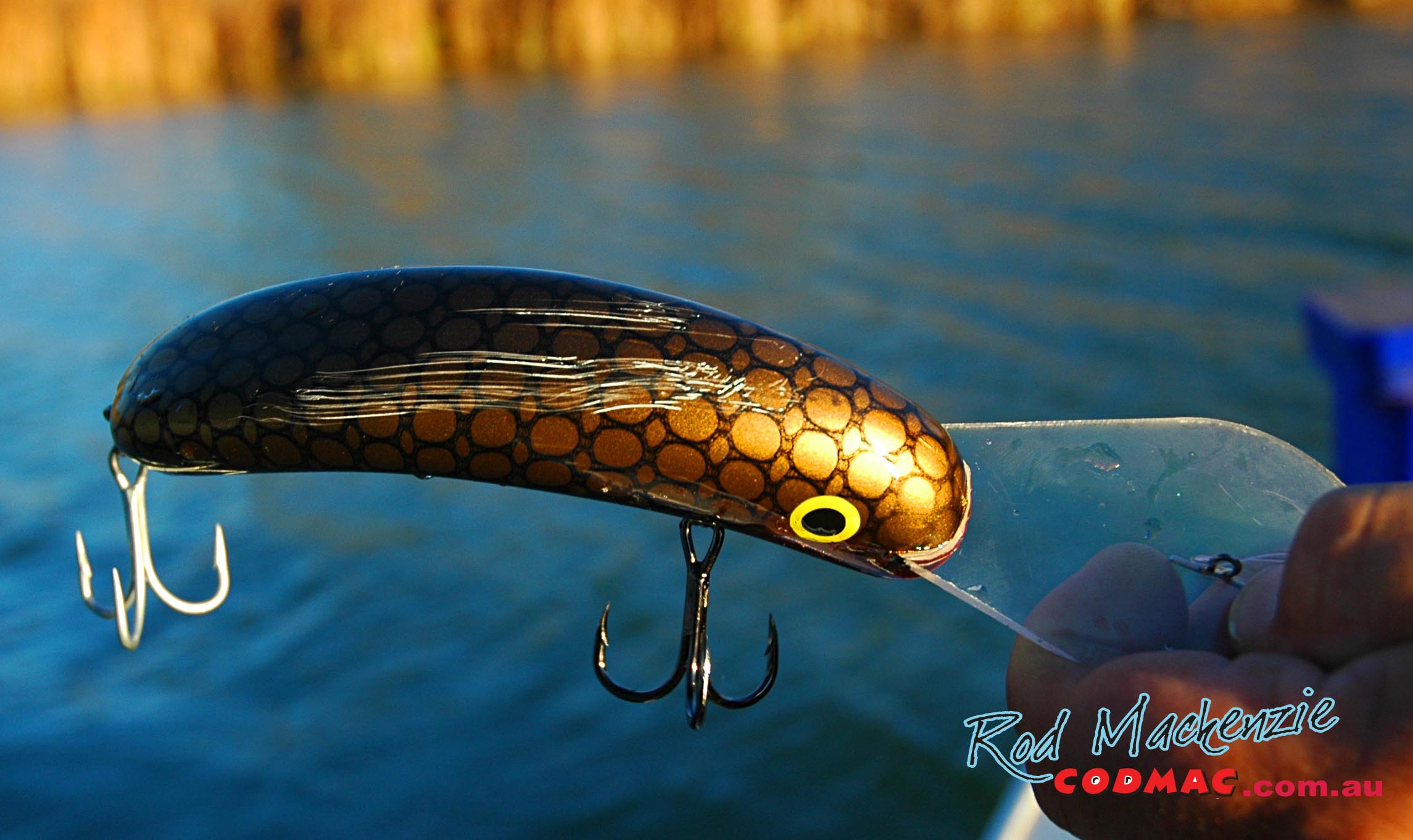
After spending the better part of a lifetime chasing Murray cod along the Murray-Darling Basin we have come to understand that the road to green fish glory is rarely paved with neon signs. However, over time, what we have found is that even the smallest of angling moments can help us to understand our fishery and those within it a whole lot better. And in some cases these seemingly small events can even help connect us to that monster cod that we so desperately desire.
Consider this circumstance. As you cast your way along a snag-ridden bank you come across a simple slime covered lure bobbling about in the weeds. To the trained eye, this chance find can portray and reveal certain traits on locations and even the whereabouts of a monster cod that might otherwise have remained unknown. How can you tell all that from a lure you might ask? Well, if you can get past the fact that you just added a freebie to the collection and look a little closer you might be surprised at what can be learned from this simple piece of plastic or timber and the attachments that remain. Battle-scared lures are by far my favourite find as they can narrow down and even pinpoint the likely location of a big Murray cod.
Having fished a particular spot on the Murray River on a couple of occasions I had chanced both times to find a battle-scared lure and telltale frayed line caught up against the same log that lay in a pocket of backwater. Both times I hammered this fishy looking spot for nil result, not even tempting a nudge.
A good look upstream suggested that perhaps these lures had drifted down from the shallow rock bar a hundred metres or so upstream and come to rest on the snag. Less than half a dozen casts at the rock bar tempted a violent strike from a giant cod that ran me straight through the rocks gaining itself another shiny lure. The very next weekend I was to reclaim this lure as I found it gnarled and twisted, resting hard against the very log where I had found the other two lures. I have since caught several metre plus cod from this reef outcrop but am yet to pull a strike from the log the lures rested against. Once we thought about it the signs were obvious and pointed the way back upstream.
We have now caught several large cod from different locations where we have found gnarled lures. Some of these we would not have fished if not for these finds.
High barometric pressure readings, an oncoming rise in water levels, full and new moons are some of the more notable signs of good fishing, but to understand the bigger picture we need to read between the signs, even if they are as simple as a lure found bobbling in the water
An Upside To Downsizing.
- This solid Murray cod was tempted by a small Sebile Flat Shad cast in the shallows on spin tackle.
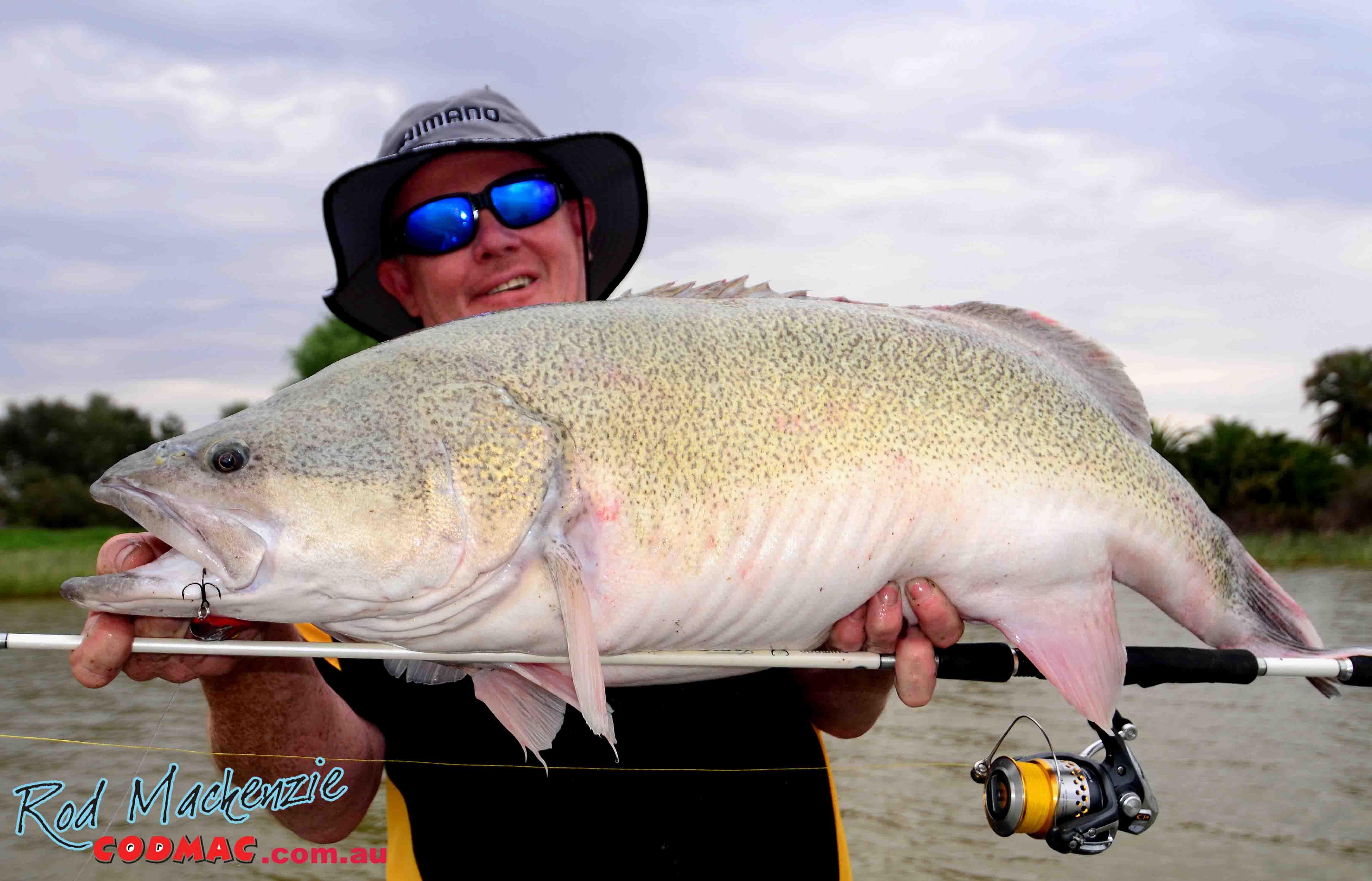
Downsizing is a term commonly used in fishing and is a technique that can work very well especially when fish are finicky or reluctant to bite. The idea of presenting a smaller bait or lure to the fish parallels our own eating habits. When we are full or not hungry we are hardly likely to front up to a large meal but offer up an after dinner mint or some other small nibbly and its often a whole other story. I have seen this exact scenario countless times where tested lures and baits are snubbed for smaller offerings.
How many times have you cast your lure to a snag and had a strike from a fish that refused to return. Cast after cast fails to draw another response and you chalk that fish up as the one that got away. Many times we have tempted reluctant fish to commit for a second time simply by changing the lures size. This is an exceptionally successful ploy when dealing with golden perch.
This season we have stepped down from our regular sized spinnerbaits and started casting smaller ¼ oz models and the results have been pretty impressive. The trick to fishing these smaller styled lures is to follow suit and downsize your gear. Light spin gear and braided lines provide maximum feel and casting distance allowing you to place the lure in the exact location and then work them at minimal speed. The only downside in downsizing comes from the unexpected and to use another popular angling quote “even elephants eat peanuts”. Several times this season the small spinnerbaits have tempted some very large cod and these can prove quite a handful on the light gear. In saying that we have won the battle on all but one occasion where the fish refused to give in and the hooks eventually pulled.
Downsizing applies to all offerings be it bait or lure. A missed strike on a small spinnerbait by a perch that refuses to return will often see it snap up a small blade placed in the same location, there are no rules other than the next offering should be smaller. When chasing perch on bait it is customary to thread several shrimps and a worm on a hook to present a generous cocktail sized portion. This has the effect to draw fish and present a viable meal. But when perch become selective a single shrimp threaded on a hook will most often out fish the more traditional presentation especially when bobbed amongst the snags. Let’s face it we don’t eat all the time and neither do fish. Downsizing is a simple yet effective technique to tempt fish that are otherwise reluctant to feed.
Shimano Terez rods
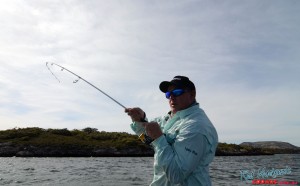
- The new Shimano Terez 10-20lb is an excellent calm water snapper stick.
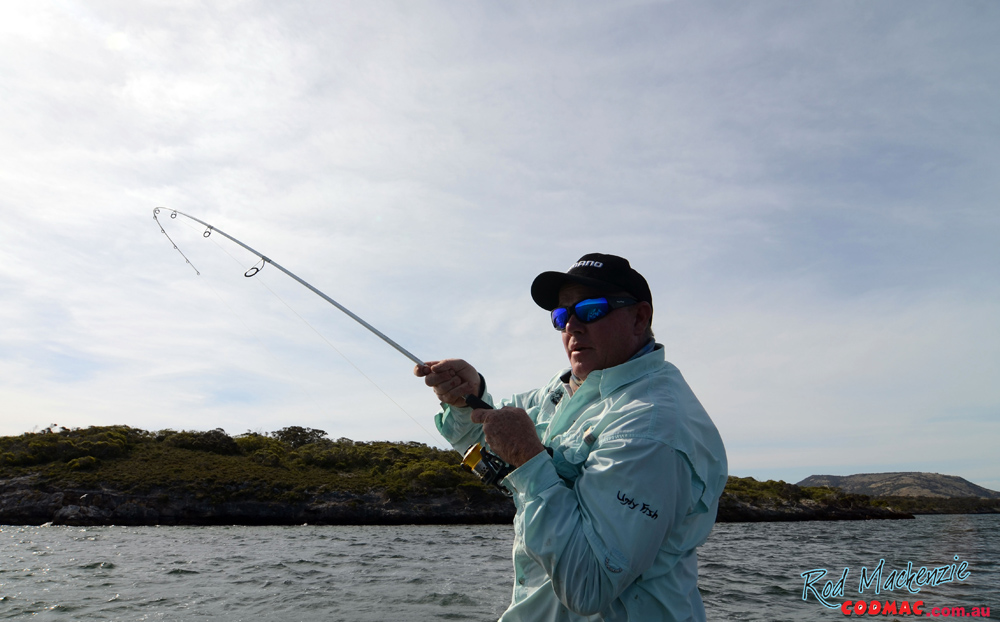
A rod series specifically designed to fish braided line to the limit — that’s what Shimano have come up with in their new Terez range. But not just any braided line, Shimano’s Power Pro line.
Built on Shimano’s exclusive TC4 blanks, the Terez rods are remarkably light yet strong, and this is achieved by the inclusion of an extra cross-wave of graphite over the standard three ply weave.
Somewhat longer than your typical rods used for a given line class, Terez are designed with a slower taper to introduce a little more give into the braid system to prevent pulled hooks.
Aesthetically, pearly white blanks with silver under and over-bindings and black trims mean these rods really stand out from the crowd. The guides on the entire range are from Fuji’s K-Series — the famous-tangle-free range with hard-wearing Alconite inserts — which are a decided asset when fishing braid.
The skeletonised custom reel seats have been designed to keep the weight down, but are still incredibly strong and also match the look of the rods.
he lineup covers fishing situations as diverse as estuary lure fishing to bluewater poppering and stickbait work.
Being braid rods, Shimano have also selected a series of overheads and threadlines with the necessary gear and drag power to match the Terez models perfectly.
Website: www.shimanofish.com.au
Blog: www.shimanoshack.com.au
Yabbies On The Chew.
- Yum- A couple of giant yabbies for the pot.
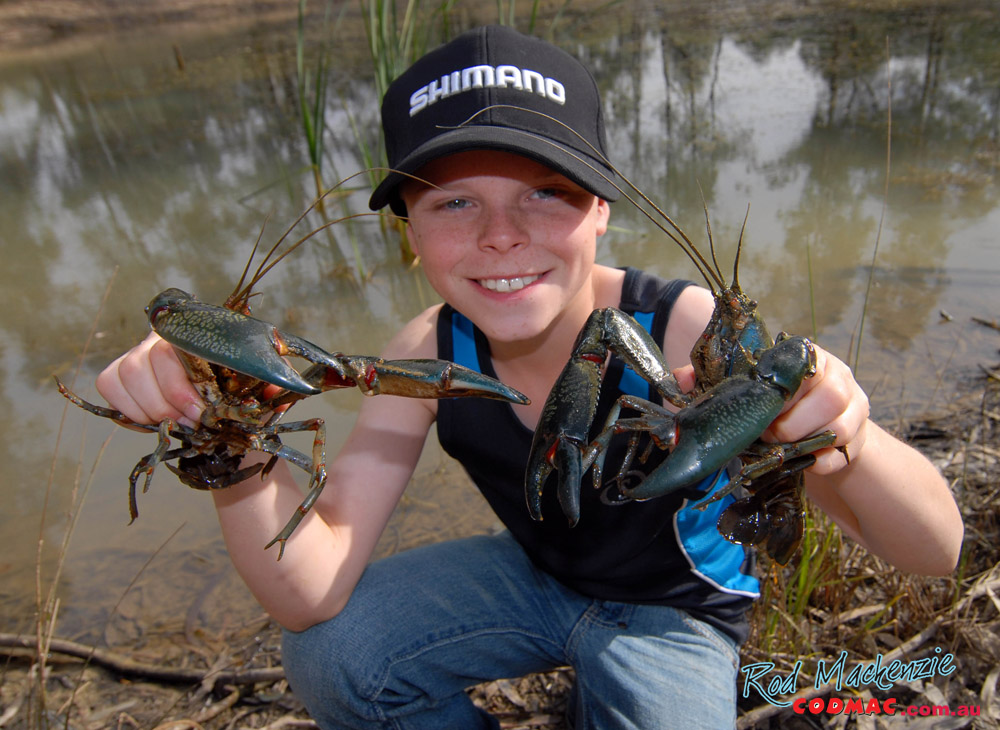
Last season’s high river levels marked the start of the best yabby run seen in more than a decade. And as the water begins to warm it looks like these tasty crustaceans are back on the menu as fishos relish in the fact that the hot bite was not just a one season affair. It seems the yabbies are starting to run in many locations and anglers are out in score hoping to catch a feed. Pooncarie on the Darling River has been a popular destination with few complaints about yabby size and number, with some anglers even confessing to have never seen so many. The Murray River and many of its backwater lagoons have also started to produce yabbies as the warmth of spring reawakens a living army of legs and claws. Having been out of the mud and feeding for more than a year the average size has increased with several we caught on our last outing some of the biggest yabbies we have ever seen. There are many methods used to catch yabbies from the humble baited line to a wide range of yabby traps. While the baited line method is great fun for the kids it can be a drawn out affair when looking to fill the pot. For those with a feed in mind, the baited yabby trap is the way to go and with numerous to choose from its worth looking at the latest in yabby catching ingenuity.
The Kulkyne Pyramid yabby trap is sold locally and is the latest must have yabby catching devise on the market. The traps are user friendly and deliver great results catching and holding good numbers of yabbies when they are on the chew. The nets themselves stack flat when in storage or on the way to the river and are easily assembled with a lift and lock assembly. As the name would suggest they have a pyramid shape with the funnels set high on the net, this allows for greater volume of yabbies to enter the net, at the same time making it harder for them to get out. And that’s a win win all round when you are after a feed of yabbies for the cooker. As yabby traps go they are in my opinion the best available choice for both strength and ease of use. Different regulations on net styles and funnel sizes vary from state to state and while the pyramid net with the 90mm ring size is legal in NSW it may not be in other locations. As the weather continues to warm it seems that yabbies will be on the minds and menus of many keen anglers in our local waters for at least another season. And while yabbying is a cheap affordable form of fishing that can be enjoyed by the whole family be sure and watch the biting end of these tasty crustaceans.